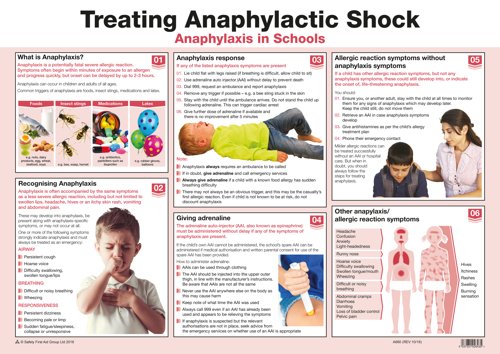
Ensure all staff are equipped to respond quickly and effectively to allergy-related emergencies with this Treating Anaphylaxis in Schools poster. Designed for clear visibility and long-term durability, this A2 laminated wall chart provides step-by-step visual guidance that empowers teachers, support staff, and first-aiders, regardless of clinical background.
Key Benefits
Prepares non-medical staff - breaks down the response process into simple, easy-to-follow visuals and instructions.
Supports your statutory duty of care - helps schools meet their legal and safeguarding responsibilities for allergy management.
Built for busy school environments - wipe-clean, fade-resistant surface ensures longevity in corridors, staff rooms, and classrooms.
Enhances emergency response time - bold illustrations and clear language reduce hesitation in high-pressure situations.
Poster Sections & What You'll Learn
1. What Is Anaphylaxis'
Defines severe allergic reaction and emphasises the urgent need for adrenaline treatment.
2. Recognising Anaphylaxis
Highlights key symptoms, such as swelling, difficulty breathing, hives, abdominal pain, and sudden collapse.
3. Giving Adrenaline
Provides clear, step-by-step instructions for administering auto-injectors (e.g. EpiPen, Jext), including positioning and dosage guidance.
4. Milder Allergic Reactions
Identifies non-life-threatening symptoms and outlines supportive care to prevent escalation.
Each section is visually coded for rapid understanding, helping staff act quickly and confidently, even under stress.
Why Choose This Poster'
Emergency-ready reference - gives all staff confidence to respond, not just trained medical personnel.
Expert-developed content - created by qualified first aid professionals and aligned with UK best-practice guidelines.
Compliance support - demonstrates proactive allergy risk management and visible safety communication.
Laminated for durability - resistant to humidity, splashes, and frequent handling in busy school settings.
Ideal for:
Classrooms, staff rooms, reception areas, dining halls, and medical bays in schools, nurseries, and youth organisations.